
Why Strip Malls Are Killing the American Small Business (What Hong Kong Small Business Gets Right)

A Journey to Asia
The american small business has been built around a single outdated idea for decades: visibility from the road. Big signs. Parking lots. Strip malls. Hoping customers drive by and walk in.
But after spending time in Asia, especially observing how hong kong small business owners operate, it becomes clear that this model is quietly failing.
Not because small businesses are bad. Because the environment around them has changed. Growing up in Philadelphia and Northeast Philadelphia especially I was accustomed to driving to a sprawling strip mall with just a handful of businesses. Asian cities are far more densely populated, so the need to develop small businesses strip malls came out of necessity.
The Strip Mall Model Was Built for a Different Era
The strip mall worked when:
- People discovered businesses by driving
- Foot traffic meant walking past storefronts
- Location determined survival
- The internet didn’t influence where people shopped
That is no longer how customers behave.
Today, customers don’t discover businesses with their eyes.
They discover them with their phones.
Yet most american small business owners are still paying rent for visibility that customers no longer use to find them.
What a Hong Kong Small Business Looks Like Instead


4
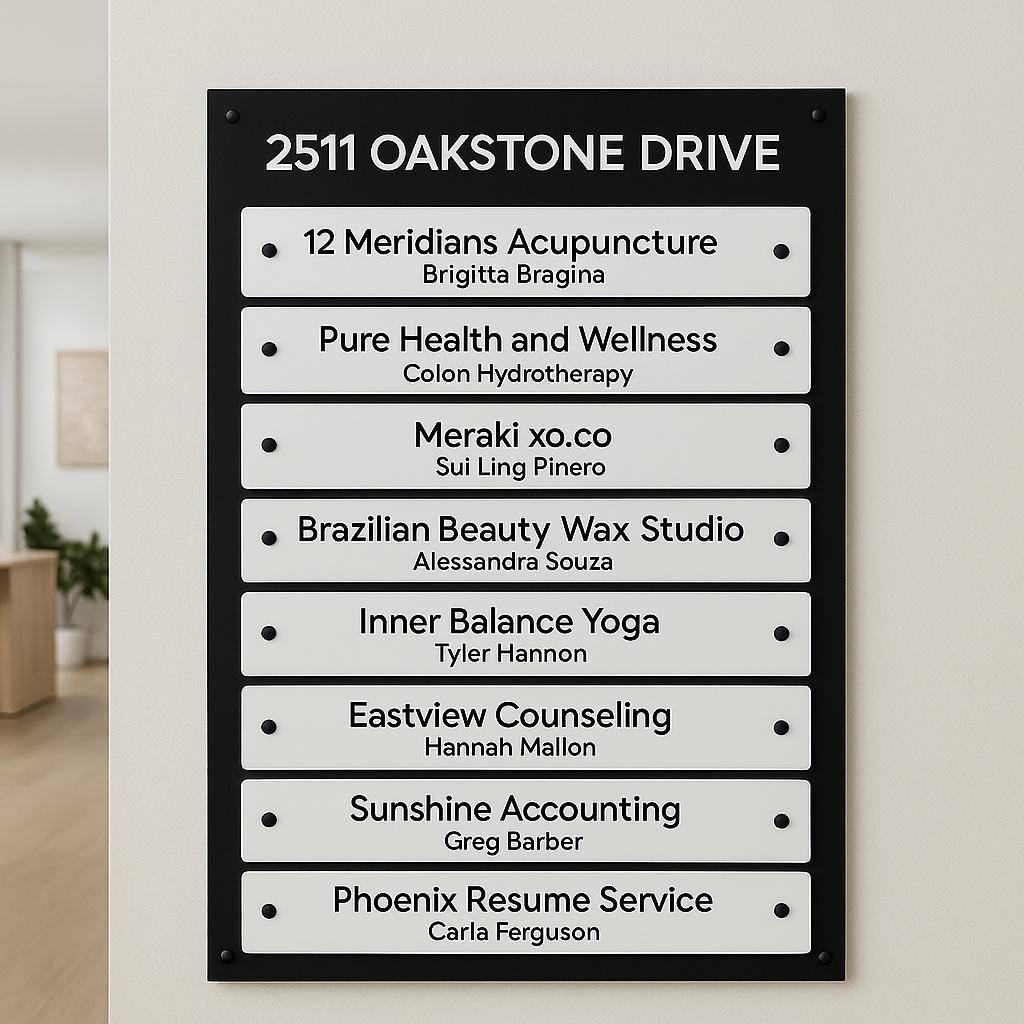
In Hong Kong, you’ll walk down a street and see a single building that contains:
- 20–50 small businesses
- Spread across 10–20 floors
- No large storefront
- No parking lot
- Sometimes barely any street-level signage
So how do customers find them?
Not by walking past.
They search.
This is how the hong kong small business survives in 200 square feet on the 14th floor of a building. This is a commonality in many Asian cities, this was also something I experienced in Tokyo. Asia’s vertical malls present a whole new way of thinking about to maximize limited space without sacrificing profitability.
Discovery Is Digital, Not Physical
When I wanted food, coffee, or a service, I never wandered around hoping to see something interesting.
I opened Google Maps.
I searched.
I read reviews.
I navigated directly to a building, took an elevator up, and found the business.
That’s it.
This is the part most american small business owners miss:
Your storefront is no longer your primary discovery tool. Your digital presence is.
Why This Is a Problem for the American Small Business
The typical strip mall setup assumes:
“If people can see us, they’ll come in.”
But modern customers behave like this:
“If I can find you online, I’ll come in.”
That’s a massive difference.
A hong kong small business can exist with almost no physical visibility because its digital visibility does all the work.
Meanwhile, many american small business owners invest thousands per month in rent for physical exposure while neglecting the one thing customers actually use to find them.
The Death of “Location, Location, Location”
Location still matters.
But not in the way it used to.
Today it’s:
Discovery, discovery, discovery.
If your business was placed on the 12th floor of a building with no sign outside, would customers still be able to find you?
For many american small business owners, the honest answer is no.
For a hong kong small business, the answer is yes — because their survival depends on it.
What This Means for Small Business Owners Today
You don’t need:
- A bigger sign
- A better parking lot
- A busier road
You need:
- A strong website
- Accurate Google Maps presence
- Reviews
- Clear services online
- Digital discoverability
This is how modern customers navigate cities.
This is how a hong kong small business thrives.
And this is the shift the american small business must make to survive.
The Real Storefront Is Now Your Website
In dense cities across Asia, small businesses learned something out of necessity:
If you are not discoverable online, you do not exist.
That reality is now true everywhere — even in American suburbs filled with strip malls.
Customers are behaving like tourists in their own towns:
They search first.
They visit second.
Final Thought
Strip malls aren’t failing because small businesses are failing.
They’re failing because the model of discovery has changed.
The american small business model was built for a world where customers looked around.
The hong kong small business model is built for a world where customers look down at their phones.
And that world is already here.